
Motor Vehicle Accident Rehabilitation Guide: What to Do After a Collision in Ontario
A practical Ontario guide to accident benefits, rehabilitation services, OCF forms, direct billing, and preparing for your first post-collision assessment.
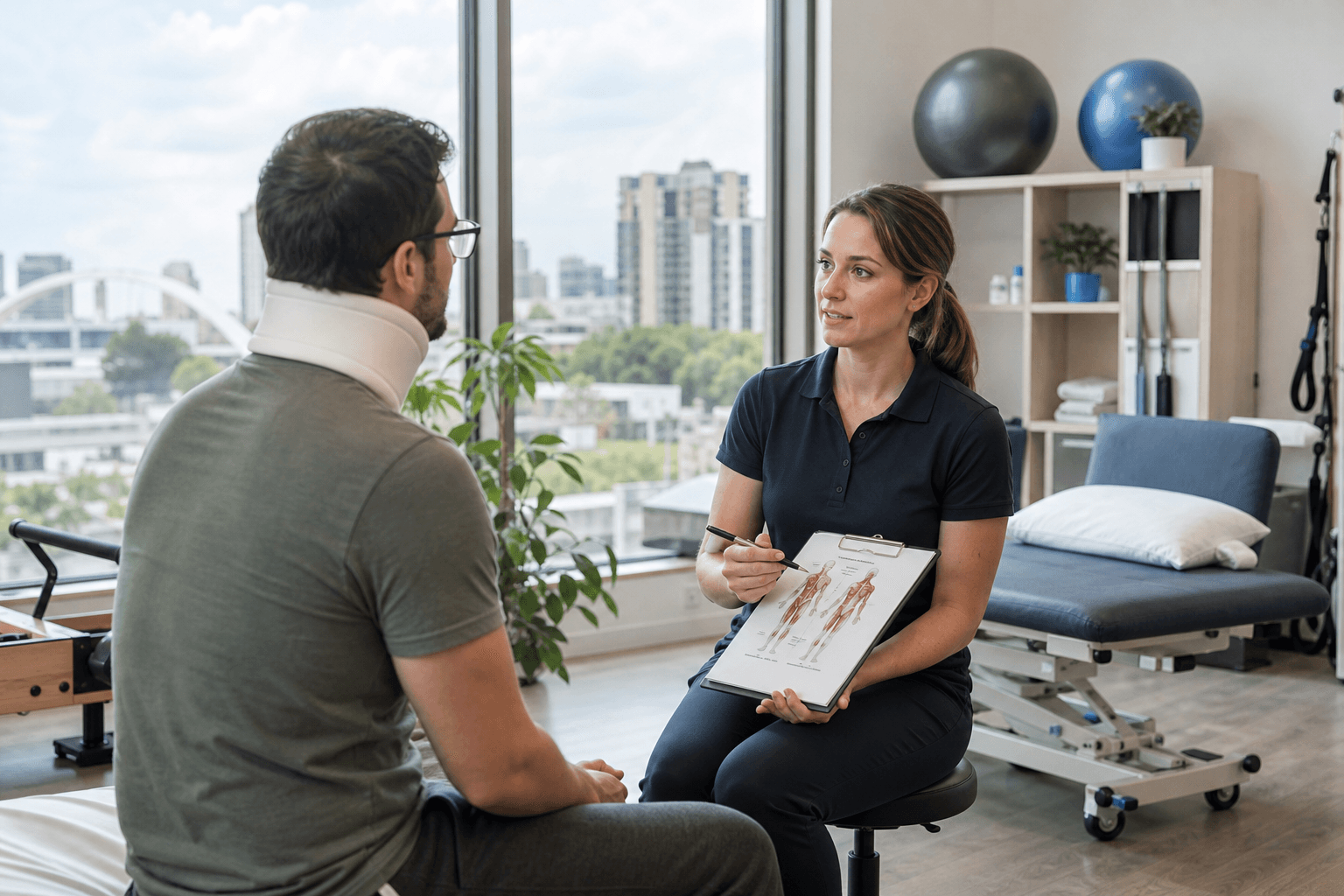
After a motor vehicle collision in Ontario, focus first on urgent medical needs, then notify your auto insurer and arrange a rehabilitation assessment rather than waiting to see whether symptoms disappear. Early symptoms can include pain, stiffness, headaches, reduced movement, stress, or difficulty managing daily activities.
This guide explains the practical sequence after a collision, how Ontario accident benefits relate to rehabilitation, what physiotherapy and other services may involve, and how to prepare for insurance and clinic conversations. It is general educational information, not legal, medical, or insurance advice.
What to do after a motor vehicle collision
“Seek care,” “report the collision,” “contact the insurer,” and “start rehabilitation” are separate steps. Keeping them distinct makes the process easier to manage.
1. Address urgent health concerns
If you have serious or worsening symptoms, seek appropriate urgent medical attention. Rehabilitation is not a substitute for emergency assessment. Tell the healthcare professional that your symptoms followed a collision and keep any discharge notes or recommendations.
2. Document and report the collision
Keep information about the collision, medical visits, symptoms, missed activities, and insurer communications. Follow the reporting instructions provided by the relevant authorities and your insurer. This guide does not set legal deadlines or determine which reporting route applies to your circumstances.
3. Notify your auto insurer
Ask how to open or update the claim, what information is required, and whether approval or specific forms are needed before treatment. Record the claim number, adjuster’s contact details, authorization information, and unanswered questions.
4. Arrange an assessment
You do not necessarily need to wait until every document is complete before asking a clinic about an assessment. A practitioner can review your symptoms, movement, functional concerns, and claim information, then explain the next steps.
How Ontario accident benefits relate to rehabilitation
Ontario’s Statutory Accident Benefits Schedule provides rehabilitation benefits for reasonable and necessary measures intended to reduce or eliminate the effects of disability or support reintegration into family life, society, and the labour market. Review the Ontario Statutory Accident Benefits Schedule for the governing wording.
Accident benefits may be relevant to medical and rehabilitation care after a collision. Eligibility, treatment limits, insurer approval, pre-authorization, forms, deductibles, co-payments, and deadlines can depend on your claim and policy. Do not treat a general explanation as a decision about your coverage.
Planet Health Care’s MVA rehabilitation information explains how its team supports accident-related care, paperwork, treatment plans, and insurer communication. Confirm your specific coverage with the insurer before assuming a service will be paid.
Which rehabilitation services may be relevant?
There is no single treatment plan for every collision. The right starting point depends on your symptoms, examination findings, functional goals, medical history, and claim requirements.
| Concern or goal | Service that may be considered | What to clarify |
|---|---|---|
| Neck, back, joint, soft-tissue, or movement problems | Physiotherapy | Assessment findings, suitable exercises, and progress reviews |
| Spinal or joint concerns | Chiropractic care | Whether the approach fits the examination and wider plan |
| Muscle tension or recovery support | Registered massage therapy | Whether massage is suitable at this stage |
| Accident-related trauma, anxiety, or stress | Psychology | Whether treatment can be included in the claim |
| Overlapping physical and psychological concerns | Multidisciplinary care | How providers will share relevant information |
Planet Health Care is a multidisciplinary rehabilitation clinic in North London, located at Sherwood Forest Mall. Its MVA program identifies physiotherapy, chiropractic care, massage therapy, and psychology as possible parts of coordinated care for concerns such as whiplash, soft-tissue injuries, headaches, and accident-related trauma. Assessment determines whether a service is appropriate.
What happens during a physiotherapy assessment?
A first physiotherapy visit should give you more than a list of exercises. At Planet Health Care, the process includes a history, movement testing, a plain-language explanation of findings, a written treatment plan, hands-on care where appropriate, and individualized home exercises. Read more about the clinic’s physiotherapy assessment process before your appointment.
The assessment may explore pain, restricted movement, changed activities, sleep, work, driving, household tasks, and recreation. A plan may include education, movement retraining, manual therapy, strengthening, mobility work, and home exercises. The initial plan is not a promise of a fixed recovery timeline. It should be adjusted as symptoms and function change.
Why coordinated care and reassessment matter
A collision can affect more than one part of daily life. Neck or back pain may occur alongside headaches, sleep disruption, reduced activity, worry about driving, or accident-related trauma. Coordinated care means considering whether another discipline could add useful support and keeping recommendations consistent.
Psychology may be relevant when a person experiences accident-related trauma, anxiety, stress, or other psychological concerns. Planet Health Care provides psychological assessment and treatment using CBT and other evidence-based approaches. Its accident-related trauma psychology information describes the available support, but your insurer determines coverage.
Tell your practitioner about new symptoms, increased pain, dizziness, sleep changes, emotional distress, or difficulty completing the recommended program. A changed presentation may require a revised plan or communication with another healthcare professional.
OCF forms, insurer approval, and direct billing
Motor vehicle accident claims often involve treatment plans and other documentation. Planet Health Care states that its team can help complete treatment plans, including OCF forms, and manage paperwork connected with its MVA rehabilitation program. Ask what the clinic will prepare and whether your insurer requires approval first.
Direct billing means the clinic submits an eligible claim to the insurer where the arrangement allows it. It does not mean every treatment is automatically approved or that you will never have a balance. Limits, deductibles, co-payments, pre-authorization requirements, exclusions, or requests for more information may still apply.
Planet Health Care says approved MVA treatment is billed directly to the auto insurer according to its program information. Its direct billing for MVA treatment guidance explains that coverage and eligibility vary.
What to bring to your first rehabilitation appointment
Bring what you have, and do not delay urgent medical attention because a document is missing:
- Insurer name, claim number, adjuster contact information, and authorization details.
- Collision information and medical or emergency documentation.
- A symptom timeline, including pain, stiffness, headaches, dizziness, sleep changes, and emotional effects.
- Medication information, relevant medical conditions, previous injuries, and current providers.
- OCF forms, treatment-plan requests, referral notes, or other insurer documents.
- Extended health plan details if another policy may apply.
- Questions about approval, direct billing, deductibles, co-payments, limits, and documentation.
Wear clothing that allows comfortable movement for a physical assessment. Tell the practitioner if a movement increases symptoms.
Questions to ask before starting treatment
- Is this service eligible under my accident benefits and current claim?
- Is an assessment, treatment plan, referral, or pre-authorization required?
- Who submits the OCF forms and other claim documentation?
- What does direct billing cover, and could I owe a deductible, co-payment, or balance?
- Are there limits on visits, treatment types, or the total amount available?
- What should I do if symptoms change or treatment is not helping?
- How will providers coordinate if more than one service is appropriate?
Ask for answers in writing when possible, especially about approval status, authorization numbers, limits, and amounts you may need to pay.
Frequently asked questions
Do I need a doctor’s referral for motor vehicle accident rehabilitation in Ontario?
Requirements can depend on the service, insurer, and claim. Ask the clinic and insurer what is required for your situation.
Can psychology be included in a motor vehicle accident claim?
Psychology may be relevant for trauma, anxiety, stress, or other psychological concerns. Coverage and authorization requirements depend on the claim and insurer.
Does direct billing mean my MVA treatment is automatically covered?
No. Direct billing describes how an eligible claim may be submitted. It does not guarantee approval or payment. Confirm limits, authorization requirements, deductibles, co-payments, exclusions, and possible balances.
What happens if my insurer has not approved treatment?
Ask the insurer what information is needed and ask the clinic whether an assessment can proceed while approval is pending. Confirm who is responsible for payment if the claim is declined or limited.
What should I bring to my first MVA rehabilitation appointment?
Bring your claim number, insurer and adjuster details, authorization information, collision and medical records, symptom notes, medication information, and any OCF forms or treatment-plan requests.
Conclusion: take the next practical step
A sensible sequence after a collision is to address urgent health concerns, report and document the incident, notify the insurer, arrange an assessment, and clarify claim administration. Rehabilitation should be based on examination findings and goals, with reassessment when symptoms or function change.
For people in London, Ontario, Planet Health Care offers coordinated MVA rehabilitation involving physiotherapy, chiropractic care, massage therapy, and psychology, along with paperwork support and direct billing for approved treatment. Confirm your claim details with the insurer, then contact Planet Health Care in North London to discuss an assessment.